
Russian isn’t just a language-it’s a living archive of empires, revolutions, and stories that shaped continents. With over 258 million speakers worldwide, it’s the most spoken native language in Europe and one of the six official languages of the United Nations. But behind the Cyrillic alphabet and the guttural rolls lies a culture that blends ancient Slavic myths with Soviet grit and modern urban energy. If you’ve ever wondered why Russians seem so intense in conversation, or why their literature feels heavier than most, it’s because every word carries centuries of weight.
Traveling through Russia is like walking through layers of history. One day you’re standing in Red Square, staring at St. Basil’s Cathedral with its colorful domes that look like they were painted by a dreamer, and the next you’re sipping tea in a quiet Moscow apartment where the walls still hold echoes of Cold War whispers. And if you’re ever in Paris and find yourself curious about the underground scene, you might stumble across escort paria-a world entirely separate from the grandeur of the Louvre, but just as real in its own way.
Myths That Still Walk Among Us
Before the Bolsheviks, before Peter the Great, before even the Kievan Rus, Slavic people told stories about creatures that lived in the forests, rivers, and hearths. The Domovoi, a small, hairy household spirit, was believed to protect the home-but only if you left him a bit of food every night. Forget to feed him? He’d knock over your boots, sour your milk, or worse. The Rusalka, a water nymph with long green hair, lured men to drown in lakes. These weren’t just bedtime tales. They were rules for survival, warnings passed down through generations.
Even today, many rural Russians still avoid whistling indoors-it’s said to bring bad luck or drain your finances. Some still cross themselves before entering a church, even if they’ve never set foot inside one. These aren’t religious acts alone; they’re cultural reflexes, remnants of a time when the unseen world was just as real as the one you could touch.
The Language That Bends Time
Russian grammar doesn’t make sense at first glance. Seven cases? Verb aspects that change meaning based on whether an action is completed or ongoing? It feels like learning a new logic system. But that complexity isn’t a flaw-it’s a feature. Russian lets you say exactly what you mean without extra words. Instead of saying “I am going to the store,” you say “Я иду в магазин” (Ya idu v magazin), and the verb alone tells you whether you’re on your way, about to leave, or in the middle of the walk.
This precision carries into poetry. Pushkin, Dostoevsky, Akhmatova-they didn’t just write novels and verses. They carved emotional landscapes into syllables. A single line by Marina Tsvetaeva can hold more sorrow than most novels. That’s why Russian learners often say the hardest part isn’t pronunciation-it’s learning to feel the silence between words.
Soviet Echoes in Modern Cities
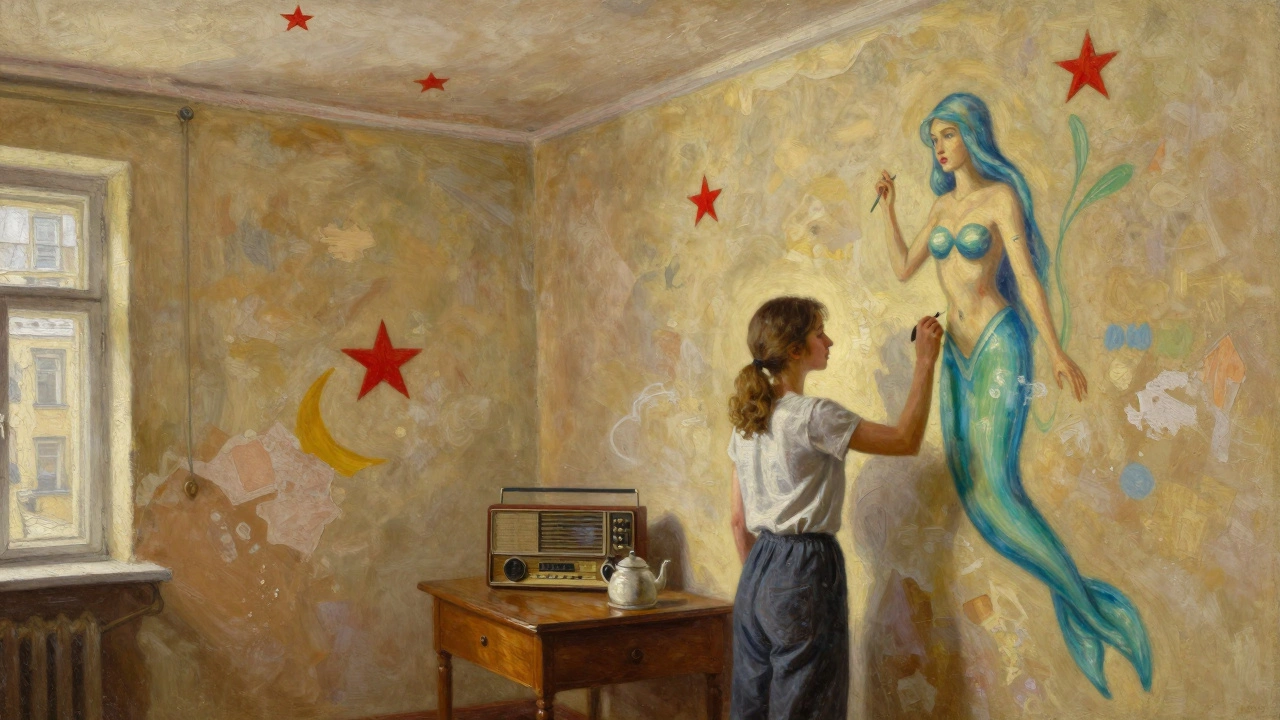
Walk through any Russian city, and you’ll see the ghosts of the USSR everywhere. The blocky apartment buildings, the broken playground equipment, the faded red stars on old government offices. But you’ll also see the resilience. In St. Petersburg, young artists paint murals on the sides of Soviet-era housing blocks. In Kazan, teenagers stream K-pop while eating pirozhki from street vendors. The past isn’t buried-it’s repurposed.
Even the way Russians talk about money reflects this duality. Older generations still speak of “kopecks” and “rubles” like they’re the same thing they were in 1985, even though inflation has erased most of that value. Younger Russians use apps like Sberbank Online and YooMoney, but still haggle at markets like their grandparents did. This isn’t resistance to change-it’s adaptation with memory.
Food That Tells Stories
There’s no such thing as a “light” Russian meal. Borscht isn’t just soup-it’s a ritual. Made with beets, cabbage, beef, and a splash of sour cream, it’s served hot in winter and cold in summer. Pelmeni, those tiny meat dumplings, were originally a way for Siberian families to freeze food for long winters. Each one had to be sealed perfectly-no air inside, or the spirit of the frost would get in.
Today, you’ll find pelmeni in frozen aisles across Europe, but the best ones are still made by hand in small kitchens. In Moscow, you’ll see families gathering on Sundays to roll dough and pinch edges together, laughing as flour covers the table like snow. This isn’t just cooking-it’s connection.
Why Russian Culture Feels So Heavy
People often say Russians are serious. But they’re not. They’re just deeply present. In a country where winters last six months, where history has been rewritten five times in a century, there’s no room for fluff. Conversations aren’t small talk-they’re exchanges of truth. A Russian friend won’t ask “How are you?” just to be polite. They’ll wait until you’re ready to answer. And when you do, they’ll listen like your answer matters more than their next breath.
This depth carries into art, music, and even humor. Russian comedy doesn’t rely on punchlines. It relies on timing, irony, and the unspoken understanding that life is hard, but you’re not alone in carrying it. That’s why Soviet-era films like “The Irony of Fate” still get watched every New Year’s Eve. It’s not nostalgia-it’s comfort.
Learning Russian Today
If you’re thinking of learning Russian, don’t start with apps. Start with a book of short stories by Chekhov. Or better yet, find a native speaker who’s willing to talk to you about their childhood. Language isn’t learned in grammar drills. It’s learned in shared silence, in misunderstood words, in the way someone laughs when you say “spasibo” too loudly.
There are over 1,200 Russian language schools worldwide, but the real teachers are the ones who don’t charge you. The grandmother who corrects your pronunciation over tea. The taxi driver who tells you why the Metro smells like wet wool in December. The barista who gives you an extra shot of espresso because you tried to say “zdravstvuyte” correctly.
And if you ever find yourself in Paris, maybe you’ll hear someone whisper “escort gril paris” in a back alley-another kind of cultural layer, disconnected from the Kremlin, yet still part of the same human story.
What’s Next for Russian Culture?
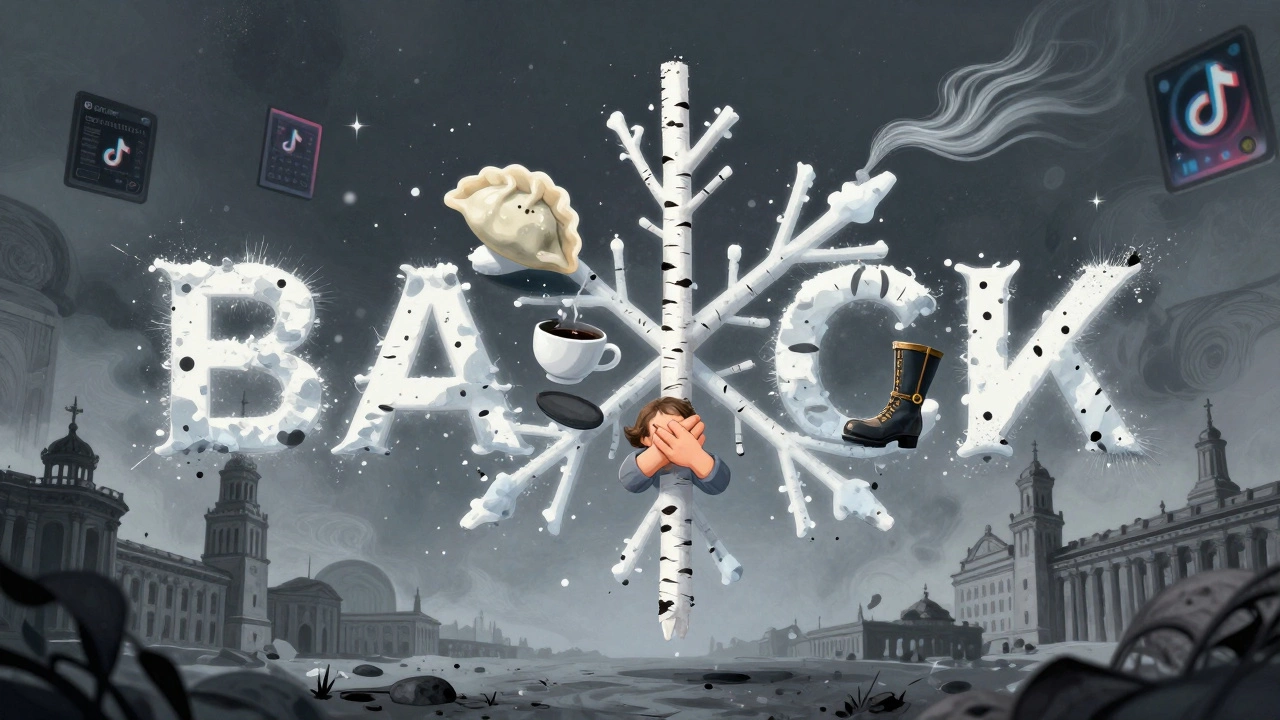
Young Russians are leaving in droves-not because they hate their country, but because they want to live without fear. Yet, those who stay are rebuilding culture from the ground up. Independent theaters in Yekaterinburg. Underground zines in Novosibirsk. TikTok poets in Vladivostok who write about loneliness, war, and the quiet beauty of birch trees.
Meanwhile, Russian literature is having a global moment. Books by authors like Lyudmila Ulitskaya and Vladimir Sorokin are being translated faster than ever. Even state-funded media can’t stop the tide of honest storytelling. The world is finally listening-not to the propaganda, but to the people.
And if you’re reading this, maybe you’re one of them. Maybe you’ve stared at a Cyrillic sign and felt something stir. Maybe you’ve listened to a Russian song and realized you didn’t need to understand the words to feel them.
That’s the magic of Russian culture. It doesn’t ask you to understand it. It invites you to feel it. And if you do, you’ll carry it with you-not as a fact, but as a memory.
And if you ever find yourself in Paris again, maybe you’ll hear someone say “escort pqris” in the dark, and you’ll know-it’s all part of the same story, just told in different languages.